Category: Resource Filled

  • The mother of all developer cheat-sheets: I love Jack Daniels.com

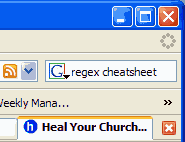
    my poor browser bar, worn out by looking up cheat sheets all the timeWhile I’m not to keen on the name of the website, I am in love with its content – I Love Jack Daniels has always been a good developer’s blog – but one gem most folks may not realize is that it also provides some incredibly useful A4 references to some of the technologies, languages and syntax that ofen have us wearing out the lookup bar on our browser.

    Now available in both a handily printable PDF and PNG format, a cheat sheet to the mother of all developer cheat sheet websites:

    HTML Cheat Sheet
    Enumerates the various tags available to the web designer, as well as a selection of useful character entities, attributes and events. 
    Regular Expressions Cheat Sheet
    Serves as a simple guide to regular expression patterns and options. 
    Microformats Cheat Sheet
    A handy reference on an emerging standdard for publishing documents on the web. 
    Ruby on Rails Cheat Sheet
    This quick guide containing the default directory structure, predefined variables, methods, reserved words and regular expression syntax. 
    ASP / VBScript Cheat Sheet
     A reference for ASP / VBScript, containing functions, collections, regular expression syntax and other useful bits of information. 
    HTML Character Entities Cheat Sheet
     A listing of the assigned character codes in HTML, with an example of how they are displayed, and description. 
    JavaScript Cheat Sheet
    A convenient guide for JavaScript, listing methods and functions, and including a guide to regular expressions and the XMLHttpRequest object. 
    MySQL Cheat Sheet
    A quick sheet of functions (both in MySQL and PHP), data types, and sample queries.
    mod_rewrite Cheat Sheet
     A reference guide for mod_rewrite, including server variables, flags and regular expression syntax. Also includes examples of commonly-used rules. 
    CSS Cheat Sheet
    Enumerates selector syntax, properties, units and other useful bits of information.
    PHP Cheat Sheet
    Easier and faster reference than visiting php.net just to be told to RTSM!  
    RGB Hex Colour Chart
     A free, printer-friendly RGB Hex colour chart for web designers. 
     

    While I’m not a drinker, I do raise my piping hot cup of joe to Dave Child, the ecommerce manager and web developer from Brighton, UK whom has so graciously provided us with such a great set of techno-tools! Cheers!

  • Dymystifying Regular Expressions

    Okay, I’ll admit it. From time to time I drive my fellow programmers noo-noo bananas, but not because of my snarky-yet-cheerful sense of humor, but rather because I’ve never met a regular expression I didn’t like.

    Oh, they still invite me to the office birthday parties, but not without glowering at me for having introduced constructs such as /(?<=(?:^|,\s*)"")(?:[^""]|"""")*|(?<=(?:^|,))(?:\s*)(?=(?:,|$))/ ... ... I suspect Shelly Doll over at Builder.com is of a similar opinion as she writes in her tutorial entitled 'Demystifying the syntax of regular expressions:’

    “Regular expressions (REs) are often wrongly perceived as mystical unknowns that only a true guru can understand. They’re ugly to look at, and if you don’t know the syntax, they can seem like cryptic strings of garbage you might get from a core dump. The reality is that regular expressions are very simple and can be easily picked up with the help of a handy cheat sheet. This article will help you amaze your friends by walking you though the most commonly used regular expressions.”

    I bring this all up as an encouragement to those of you coding plug-ins, custom pages, and/or other tools for your church’s website so that the many of you cringe of regular expressions may throw any fears borne out of ignorance …

    … well that and I didn’t want to lose the link to this excellent-yet-simple how-to/introductory article.

  • Why your Church needs a Privacy Statement

    Tired of political groups filling up your U.S. snail mail box with letters to your 12 year old daughter?  Irritated with self-employed church members spamming you with the latest gift-basket craze? If so, then perhaps your church is lacking a privacy statement to protect contact information you submitted to the church’s sunday school enrollment or pictoral directory.

    Last week, the North Carolina Republican Party asked members to send their church directories to the party. The result were complaints from groups whose demographics would normally be supportive of the GOP – including this barb by Rev. Richard Land, head of the Ethics and Religious Liberty Commission of the Southern Baptist Convention:

    “Such a request is completely beyond the pale of what is acceptable …”

    I agree – for two reasons. First, it can potentially endanger a church’s tax-free status by involving it in a political campaign; especially if a directory or mailing list was forwarded by a well-meaning staff member.

    The Rev. Richard Byrd Jr. of Cornerstone Baptist Church in Greensboro addresses my second point when he said anyone sending in a directory:

    “[it] would be betraying the trust of the membership …”

    And this is why your church needs a clear and concise privacy statement that either in whole or in part should be conspicuously published on the introduction page of any hard-copy directory and as a user-agreement form on any electronic directory.

    Now not being a lawyer, I went about and did a search on the topic. As you might expect, alot of legalese. But I did find one or two sites that either provide an explanation of your obligations and/or provide forms and/or templates for generating your own privacy statement. Here you go, in no particular order:

    The bottom line is, failure to create and publish such a policy leaves your church little recourse in protecting the privacy rights of your congregation and open up your church’s data to all sorts of spammage whether it is to pimp-up a political campaign, or hustle Tupperware and Mary Kay by some of the more entrepreneurial members of your congregation.

  • Sample Regular Expressions

    Neex an example of a regular expression real quick? Want to test it without fouling up your code? Here are two ‘resource-filled’ sites that help get you there and back.

    Busy, busy, busy today folks – so just a quicky. And yes, I know that I’ve mentioned at least one of the following regular-expression example (and test) sites I’ve before. That said, like a good burrito it bears repeating:

    • Regular Expression Library – this website claims to be “the Internet’s first Regular Expression Library.” Whether they are or not is irrelevant, what is relevant are the close to 1000 semi-documented regex examples they provide.
    • Regular-Expressions.Info – also blessed with examples, I’m partial to their javascript testing page – and find their detailed explanations of difficult expressions well worth the visit.
    • Perl : Sample Regular Expressions – nothing as comprehensive as the previous two links, but here are some nice simple examples of the type of one-line-wonder stuff you may want to add into a MovableType or WordPress plug-in or text filter.

    Now you have no excuse not to shoot yourself in the foot with a nice nasty regex!

  • Regluar Expressions Editors and Testing Apps.

    McCulloch 1432 Gas Powered Chainsaw
    Regular expressions are like a chain saw … a gas powered chain saw. At first, you’re deathly afraid of even touching it. When you do fire one up for the first time, it’s only after you’ve dressed yourself like a hockey goalie and have your spouse waiting just outside of your roped-off area with his or her their finger on the 911 speed dial button.

    Once you realize that if you practice some common sense, that is you take time to think through what you’re trying to do first, regular expressions become your favorite power tool – just like your chain saw.

    For example, now that I’m pondering a move to WordPress, I’ve got to port Scripturizer from Perl to PHP. Scott Yang has already done much of the work, but the regex needs to be expanded to include multiple references, e.g. Romans 10:9-10, 12:1-2 or Matthew 5:6-7, 9-12.

    Debugging something like this can become incredibly frustrating using the code and test method. Not so much since I have both Perl and PHP installed on my local PC. Still, having tools to help construct, visualize and debug your regular expressions can help reveal hidden bugs, catch typos that snuck past your bleary gaze, and/or teach you how to use your chain saw – I mean regex – without cutting your foot clean off.

    So here are some tools, tutorials and testers I found:

    Desktop Tools:

    • Kiki – a free environment for regular expression testing (ferret). It allows you to write regexes and test them against a sample text, providing extensive output about the results.
    • For those of you who love Linux: the KDE Regular Expression Editor
    • Expresso – A tool chest for building and testing regular expressions for Microsoft Windows .NET.
    • Like PHP but hate regular expressions? Try the RegExpEditor module with PHPEdit.
    • RegEx Coach – don’t let the plain-jane website fool you out of using this Window-based tool.

    Online Tutorials:

    Online Testing Tools:

    Leave a comment if you have a favorite not on the lists. Or if you have tried one of the above cool regex tools and tutorials, let us know what you think.

  • How To: The Scripturizer for Dummies

    A week or two ago, I had a friendly back-n-forth with Ted Olsen at Christianity Today over what’s “worthwhile” on the blogosphere. My perception is that what is trash to one reader, is treasure to another. That the beauty of the blogosphere, especially the Christian blogosphere, is that it represents the many varied and talented parts of the Body.

    “There are different kinds of gifts, but the same Spirit. There are different kinds of service, but the same Lord. There are different kinds of working, but the same God works all of them in all men. Now to each one the manifestation of the Spirit is given for the common good … The body is a unit, though it is made up of many parts; and though all its parts are many, they form one body. So it is with Christ.” – 1 Cor. 12:4-7,12

    Case in point: Rob Hulson’s blog

    While this blog may not be worthwhile to the overall CT demographic, yesterday’s post is certainly useful to those of us who are Christian, and blog … and/or run church websites. Especially those of us who like to hyperlink our Scripture references to online Bibles.

    This is why I wrote the Scripturizer module and MT-plug-in. And seeing a need for documentation, this is why Rob so generously offers us ‘How To: The Scripturizer for Dummies‘.

    So instead of one member of the Body tearing the other down, we sharpen each other as ‘iron sharpens iron’. In fact Rob along with a few others, have offered suggestions to improve and or fix Scripturizer. Changes that are needed. Changes I need to get make time for and publish. Changes I’m now inspired to make because of such good works like those of Rob!

    “A word fitly spoken is like apples of gold in a setting of silver. Like a gold ring or an ornament of gold is a wise reprover to a listening ear.” – Proverbs 25:11-12

    Thank you.

    Now go read his post, then come back after this weekend and bug me if I haven’t improved the Scripturizer based on your loving and constructive criticisms.

  • The Coolest Church WebSite, Ever!

    If your church doesn't have a spinning cross on its steeple, then why put one on your site?I love parody. Yes, even church-inspired parody. I even like it when I’m parodied, but only if it’s very well done. Case in point: The First Baptist Church of {unidentified}, one of the coolest of cool church websites. A site created some time ago by webservant Don A. Elbourne, who actually runs a very usable and accessible website for the Lakeshore Baptist Church, Lakeshore, Mississippi.

    What makes The First Baptist Church of {unidentified} parody so funny is that every element Don employs on the page represents a topic I’ve written about at one time or another. Here are just a few I could find in the short time between wiping the tears of laughter from my eyes and explaining to my youth pastorno really, this isn’t the way we want to go ….”

    Giggles and grins aside, this parody preaches an important point: anything that gets in your user’s way should be crucified.

    In fact, about the only things I can think that are missing from this hilariously good example of bad web design are:

    How about you? Did you find anything else on top or underneath that someone developing a church website should avoid so they don’t wind up creating ‘The Coolest Church WebSite, Ever!’

  • Dedicated Server Security Tips for Newbies

    This post is dedicated to all of you running your church’s website in the choir robe closet, or who have been graced with a generous and geeky member who has taken advantage of one of those cheap, unmanaged dedicated server deals advertised at places like WebHostingTalk:

    Richy’s Random Ramblings: Techy: Handy Security Tips.

    As the author plainly states, “This list is not comprehensive, nor does [he] take any responsibility for any harm that may come to your server if you use any of these commands.” That said, I found this a very good “quick reference” for those of you thinking about running or leasing your own Linux/Apache server.

    Along with the tips found on Richy’s site, here are some other things to worry about, each with a link to some other helpful “Security for Newbies” type page:

    Now if this hasn’t scared you out of running your own server in the basement of your church or charity (and I’m hoping it does), then may suggest, no … I COMMAND YOU to go buy and then read “Hacking Linux Exposed” before you take the dive.

    How ’bout some of you other pros out there. I’m sure I’ve missed something. Leave a comment, add to the list.