If you aren’t a regular reader of ChurchMarketingSucks.com, then either you like wandering in the church communications wilderness, or you just haven’t had time to add their RSS feeds to your aggregator … go ahead … I’ll wait.
Now that we’ve taken care of that piece of business, I thought I might bring to your attention their listing of their top 10 posts for 2012. Why? Glad you asked.
As your church &/or charity finalizes your communications strategy for 2013 — assuming your organization plans such things in advance — I thought it might be helpful to create a colorful handout of CMS‘ top 10 list so you could better identify targets for tactical textual content.
Infographic: Top 10 Posts from Church Marketing Sucks for 2012
Once you’re done downloading this infographic, why not show some love and link on over to Church Marketing Sucks and read the rest of their top 10 posts for 2012 article?
In the past year, I’ve received a number emails requesting features and implementation requests that seem to think that this Facebook service can solve all their social media marketing needs.
So it pains me when I have to reply with a ‘no’ to some very nicely worded requests.
I generally spare such a request of the technical limitations of Facebook’s API. I also spare them the bitter reality that there is no “magic bullet” when it comes to digital marketing.
So to make up for the latter omission, I’ve written below what I believe it takes for a church or charity to survive their drive along the information highway – specifically in terms of online outreach and ministry:
Vision;
Strategy;
Tactics; and
Activities
… in that order.
Problem is, most organizations I’ve seen fail on the web do so because they jump into activities without understanding that success needs to have:
measurable objectives;
focused, targeted audiences;
feasible short, medium and long term plans; and
return on investment.
I’ll blog later about these “haves” in a future post. For now, let’s define what I mean by Vision, Strategy, Tactics and Activities … in that order.
Vision:
Grow organization that …
… serves their local community of Lutherans …
… by feeding their faith; and…
… equipping them to feed others.
Strategy:
Bring in more visitors.
Get visitors to become members.
Get members to become active participants.
Get active participants to become evangelists.
Tactics:
Attracts more visitors through popular digital venues.
Provide online content that allow visitors to comfortably explore your organization.
Provide online tools that help members plug-in to programs and collaborate.
Provide online training and services that help evangelists get the word out.
Activities:
Get the sermons, lessons online, videos and photos onine; and track it all with Google Analytics.
Create a community presence via a Facebook and/or LinkedIn group, and don’t forget Disqus.
Integrate tools such as BaseCamp for program management and Google Apps for document processing.
If you’re finding that your organization is not getting anything but a passing interest from your online activities, then why not take a step back and consider the above?
If you still feel that a rocking WordPress theme for your church website is the key to your organization’s digital marketing management, then I’d ask you to consider what measurable results you received from similar efforts in the past?
As always, comments, questions and criticisms are welcome, so long as their couched in love.
Facebook rocked the internet yesterday with 5 new plugins, one of which is an API for the Facebook Like Button. After reading about it and playing a bit with the Facebook’s Like Button generator, I decided what’s needed is a WordPress plugin that allows folks to easily configure the look-and-feel of the Facebook Like Button, and then automatically add it the beginning and/or the end of their posts.
Update 26-Apr-10
FYI, I just released version 0.1 of the The Facebook Activity Widget Plugin for WordPress – yet another useful (and different) WordPress plugin for displaying Facebook Social plugins on your website.
Update 25-Apr-10
Version 0.4 just got released – it now has a preview feature built into the administrator panel … and I’m starting to get translation .po & .mo files from abroad (thanks!-). It’s also now being distributed via the WordPress Plugin Repository.
Update 24-Apr-10
Version 0.2 is released as of Saturday, April 24, 2010 7:14 Eastern Standard Time.
Also after some excellent email and FB message feedback from some early adopters, you can now also decide whether or not you want the FaceBook Like Button to appear on the top and/or bottom of individual pages, individual posts and/or your front page.
Installation & Use
I also wanted to keep it simple, so here’s how it works — using the standard WordPress plugin installation process:
Upload the ‘fblikebutton.zip’ file to the `/wp-content/plugins/` directory using wget, curl of ftp.
‘unzip’ the ‘fblikebutton.zip’ which will create the folder to the directory `/wp-content/plugins/fblikebutton`
Activate the plugin through the ‘Plugins’ menu in WordPress
Configure the plugin through ‘FBLikeButton’ submenu in the the ‘Settings’ section of the WordPress admin menu.
Modify the fields to choice and save.
Here’s a screen shot below of the administrator screen (you’ll want to click on it to see it full size):
Here’s how the FaceBook Like button appears on the bottom of this post:
This being being version 0.1, you can bet your sweet bippee there’s more to come. Still, I wanted to get this out to the WordPress community as fast as possible.
A bit more about the FaceBook Like Button
What’s nice about the Facebook Like button is that no login to your site is required. Even if you’ve never visited HealYourChurchWebsite.com before, they can get social context starting with their very first visit.
If you’re logged into FaceBook, then you can see which of your friends like a site — without the site knowing anything about you. Pretty neat, huh?
Download It
Also, I’m currently in the process of setting getting established with the WordPress SVNÂ and everything else that goes with publishing an official WordPress plugin.
Last Friday I posed the question “what actually heals a church website?” Now it’s Tuesday and I’d like to talk about this in light of the many excellent comments received.
But first a BIG THANKS to all who participated in this dialog – this was both good and healthy and it is much appreciated.
1. If it’s broke, please fix it
“The medicine that heals depends on the illness — if you’ve got a spinning gold cross, removing it becomes job #1” – Mickey
It’s such a simple point, yet a very salient one. There are some very obvious maladies that afflict our church websites. When we see them, we should fix them.
For those who don’t know what I’m talking about, I prescribe my post entitled:
Even if you do know what I’m talking about, it’s a fun read … don’t worry, we’ll be here when you get back.
2. If it ain’t broke, don’t fix it!
“I fixed up my church’s website with WordPress and a user-friendly, inviting design. Within months they’d wrecked the colors, changed pictures of people to pictures of furniture, and otherwise mucked it up.” – Jeremy
Okay, I’m not trying to be a wise-guy here, but I’ve seen this happen all to often. Usually this occurs when an individual has an agenda that it outside the scope of what the church website is trying to accomplish. Two that come to mind are:
“Even if it has to be black Times New Roman on a stark white background, I’d say job one is relevant content. When, where, what, who, and how, and for good measure, don’t forget why.” – lemon
I’m thinking ‘lemon’ pretty much summed it all up rather nicely with his/her enumeration of the basics that help us avoid the “Seven deadly sins of web writing.”
4. Identify your target audience
There are really (at least) two distinct audiences for a church website:
People not part of your normal congregation, seeking information about your church …
People in the congregation who want to know what’s on this week …
Since the introduction of this blog back on May 17, 2002 I’ve been preaching the importance of identifying the purpose and personality of your church website – and then aiming all content, controls and/or contrivances at seekers and members alike.
Put another way, “A church website that fails to convey the purpose and personality of the congregation and staff will also fail to bring new members into the door.” – Empty Parking Lot Tabernacle
5. Identify your process & work-flow
“Unfortunately I think its a people problem, the site is just a symptom. People need to see it as a communication medium and commit to its use. I’m surprised at how poorly email is used by churches, let alone websites.” – David J
Unfortunately, I think the master of the B2Blog has offered a diagnosis that is as incisive as it it accurate. David accurately points out that unless we understand the work-flow that defines how we:
identify things that need fixed;
identify things that work;
identify what makes compelling content; and
identify the target audience of your church’s purpose and personality …
… then a church website is likely never to get healed no matter what content management system it employs, …
… no matter how much Flash animation the site does or does not have, …
… no matter how many social networks the church-geek API’s into the site.
In short, unless church doesn’t have well defined processes for how to effectively get the right information out to your target audiences, then you’re efforts are like the person Paul describes in 1 Corinthians 9:24-27 as aimlessly batting at the air.
Twitter gives our mundane lives meaning, that’s why it beat the snot out of a more ‘feature-rich’ Pownce.
To prove my point, let’s rewind about a year and a half ago to Tamar Weinberg’s comparison entitled ‘Twitter vs. Pownce: Who Pwns?‘ Dutifully she does what many of us do while shopping for software, cars, and food processors – she compares and scores the features of one product against another to a conclusion that reads:
Pownce 5, Twitter 3. Pownce wins!
There’s only one problem with that approach, while features may sell a product, it is ultimately functionality that sustains a product; software or otherwise.
Which is why I think Scoble succinctly hits the nail on the head while unwittingly predicting Pownce’s demise in his Twitter vs. Pownce post also from early July 2007:
“But, anyway, I still like Twitter the best. Why? No complications. It does only one thing. I find that on my cell phone I go back to Twitter before I go back to any of the others. It’s lightweight.”
Put another way, when it comes to microblogging, Twitter has it all over Pownce because it makes it easy to do the one thing we all want from microblogging – making the mundane instances of our lives meaningful, while learning new things about our friends without coming off like a stalker.
Disagree as some “new media marketeers” might, the reason we like Twitter is the same reason we fell in love with Blogger, it got out of the way and let us opine reflectively about how our cats would join us in contemplating the lint in our navels.
For example, why anyone would follow my own Twitter page is beyond me, yet some find the fact that I fertilize my lawn in December and enjoy smash-mouth football entertaining and interesting.
And like blogging, Twitter easily allows our friends and relatives to quickly comment at their convenience – only with the excellent 140 character excuse for not engaging in exposition and detailed explanations.
All this while providing others context about ourselves that may not come out in our blogs, lectures, books and top-rated podcasts. This latter point is nicely explained in this 2:25 YouTube video from the good folks at the CommonCraft Show aptly entitled ‘Twitter in Plain English.’
Pownce unfortunately lost sight of these primal purposes for microblogging, and in the process ‘featured-creeped‘ their product to death. Not an uncommon instance for software in any era. Especially when said offering described its services with a church-speak-like mission statements:
“… Pownce is a lightweight productivity app, built on top of the stream, and it has all the pluses and minuses of a productivity app (including that you can use it to share music with friends!)” – Pownce is competing with 37Signals, not Twitter!
Any wonder we all stopped using Pownce around 160 days ago?
So what has this got to do with your church and/or charity website? Glad you asked.
Remember, software features are only relevant to the primary activities you’re trying to accomplish with the assistance of automation.
Put another way, when you’re picking or designing a program to get something done – ignore all the fluff-n-stuff that has little or no bearing on what you want to get done.
For example, if all you want to do is post 1-up snips of your daily life, then Twitter is just enough software to get it done. No need to worry about file storage, groups, rooms, etc …
… which is also why I’m thinking Twitter is also likely to eventually beat the snot out of FriendFeed; but I digress … so more on that topic latter.
For now, here are some related links on this topic:
Your mileage may vary on this one, but deep in your heart, you know I’m right about making the mundane meaningful vs. marketing appeal of Twitter.
Now please, if you don’t mind, link this post in your next tweet, add it to all your social network links so I can be proven wrong about the marketing thingie. A simple @deanpeters reply is all it takes!-)
Do you not know that in a race all the runners run, but only one receives the prize? So run that you may obtain it. Every athlete exercises self-control in all things. They do it to receive a perishable wreath, but we an imperishable. So I do not run aimlessly; I do not box as one beating the air. – 1 Corinthians 9:24-26
There’s no getting around it, despite the efforts of many to teach, rebuke, correct & train in righteous web design, there still exists a great cloud of witlessness when it comes to the Church’s presence online. A fact painfully corroborated by the persistent body of ‘kitsch‘ out there that distracts, annoys and otherwise drives-away people seeking and/or serving the Lord.
WHOOOOSH – flame on!
I should know, as I’ve been engaged in mental combat with these forces of evil web design idioms since the turn of the new Millennium, first in collaborating with Vincent Flanders on his second book, an act which lead to the eventually May 2002 establishment of Heal Your Church Website.
But enough of my credentials, lest I start this post start sounding like a Pauline epistle, though I should probably mention that I do the software as a service thing for a living … but that’s plenty about me, as others equally qualified have since dashed headlong into the breach.
This would include Cory Miller and James Dalman at Church Communications Pro (CCP), the latter of whom begged the all important question: “Is Church marketing dead?” Specifically, pondering aloud:
There is something going on but I quite can’t put my finger on it. It’s a gut feeling that’s right more often than not. I think the church landscape is drastically changing and that church as we know it now is going to evolve (no, I am not supporting Darwin) into something much different. It’s just a hypothesis or idea I’m working on, whatever that’s worth.
To which my response is: “James, let me save you a few steps. Church marketing isn’t dead, it’s just stuck on stupid!”
If that weren’t the case, why would sites and services such as CCP,Church Marketing Sucks, For God’s Sake Shut Up, and a handful of others continue to, and with apologies to Vincent Flanders, offer weekly lessons in good church marketing by looking at examples of bad church marketing?
Or on a more serious note, how many of us seen all to many unique local churches dive through the porpoise-driven hoops of Warren-ology just to become different like everyone else?
And that’s really my point, it’s not that church marketing is dead, it is that we’re stuck on driving down the wide and easy path to church marketing, rather than seek out a difficult path that includes:
Studying Scripture to see where marketing and evangelism intersect;
Teaching lay staff and church on what real marketing is and how it works;
Understanding that the Church didn’t start in 2000, but rather 2000 years ago;
Putting aside the need to agree 100% with everyone 100% of the time;
Initiating marketing teams as opposed the message controlled at a single point;
Daring to be different without amputating one’s self from the Body.
Look, we have centuries of beautiful sacred songs, art and literature as the result of the artistry that was once the Church’s … why can’t we have the same for church marketing in the 21st century?”
Or put another way, Franky Schaeffer was right when he asserted that Christians are no longer influencing society through various forms of media, but are instead influenced BY it. A neat trick when you think Francis Shaeffer’s son warned us about this as far back as 1981!
WHOOOOSH – flame off!
Oh, and before I forget, to my Eastern Orthodox friends … a belated ΧÏιστός ΑνÎστη!


 I’ve become aware of this after the popularity of my “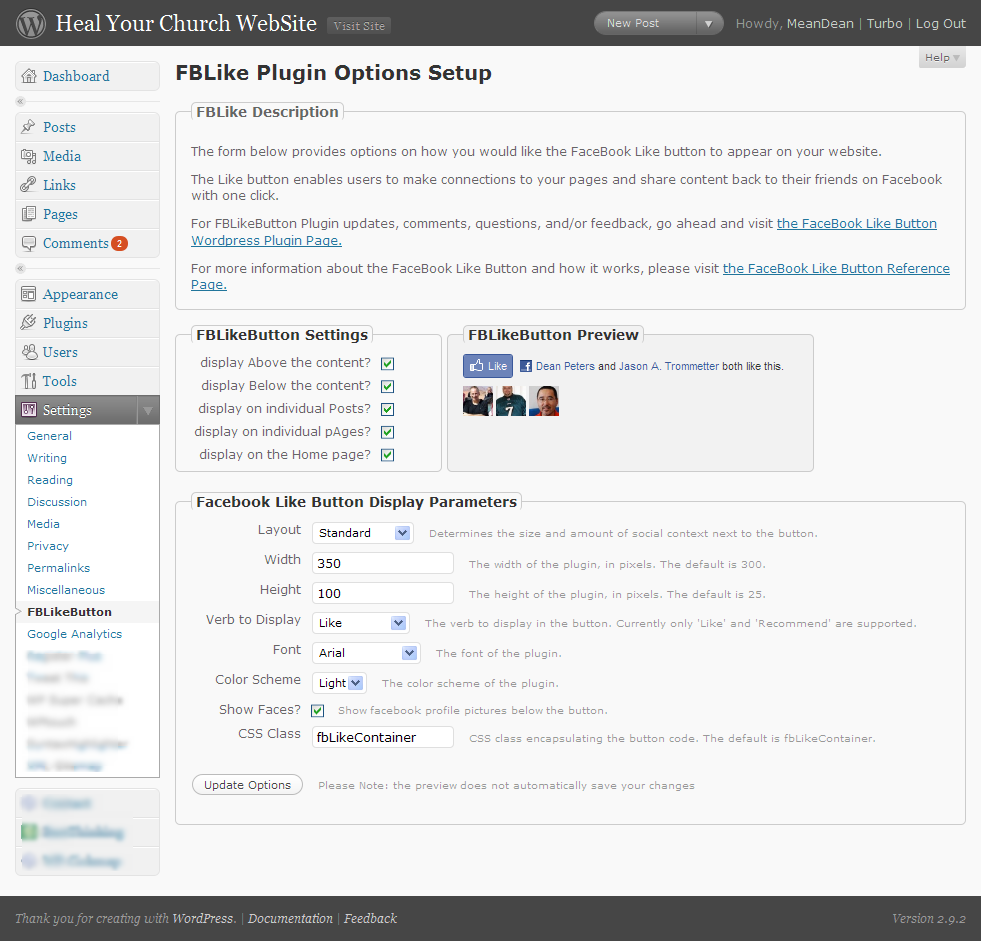



 To prove my point, let’s rewind about a year and a half ago to Tamar Weinberg’s comparison entitled ‘