Month: May 2011

  • Bad idea design poster #11 – Canned Content

    One of the things myths I’ve heard from attending my share of  Word Camp Raleigh events is that template systems are somehow a magic bullet to a successful online marketing campaign.
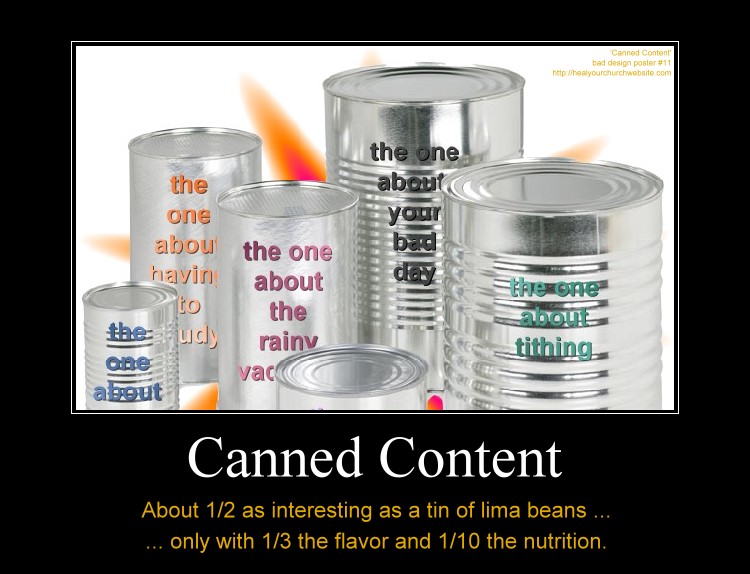
    Canned Content, about 1/2 as interesting as lima beans with 1/3 the taste and 1/10 the nutrition.

    Not that there’s anything wrong with terrific tools such as  Thesis, Headway, Genesis, and Builder; nor the premium themes one can purchase for them.

    Rather I’m hoping that along with the discussion of getting a fast start with premium framework themes and plugins that we also remember what usability guru Jakob Nielsen said about ‘Information Foraging‘ back in 2003 when describing how to catch and keep visits from data hungry first time visitors:

    The two main strategies are to make your content look like a nutritious meal and signal that it’s an easy catch. These strategies must be used in combination: users will leave if the content is good but hard to find, or if it’s easy to find but offers only empty calories.

    Basically, Nielsen is detailing how to attaining user-activity goals through the careful crafting compelling content and the navigation to it – known in the web strategy/analytics world as a ‘conversion funnel.

    So it is my hope that amid discussions on how to make our blogs look  ‘different like everyone else’ via various rendering engines, that we also take some time to talk about how-to develop a sensible information architecture that best suites the goals of your church and/or charity.

    Put another way, we need to remember that if  “Web users behave like wild beasts in the jungle …,” then we probably want to avoid taunting such ‘Informavores‘  with ‘canned content’  when in fact only raw meat will satisfy their hunger.

    In other words, just because a number of the speakers are justifiably and understandably using this conference as an opportunity to sell their template and plugin wares – it shouldn’t be to the exclusion of those in attendance whom are seeking help with all the other aspects that go along with establishing an effective web presence.

    Meanwhile, if you’re headed into town, let me know. If you can’t make the event, keep in mind that there’s a “SitePoint Podcast coming to WordCamp Raleigh.”
  • Making a Ready Defense by Planning for Failure

    Originally published May 2, 2008, made some formatting adjustments, and bumped this up.

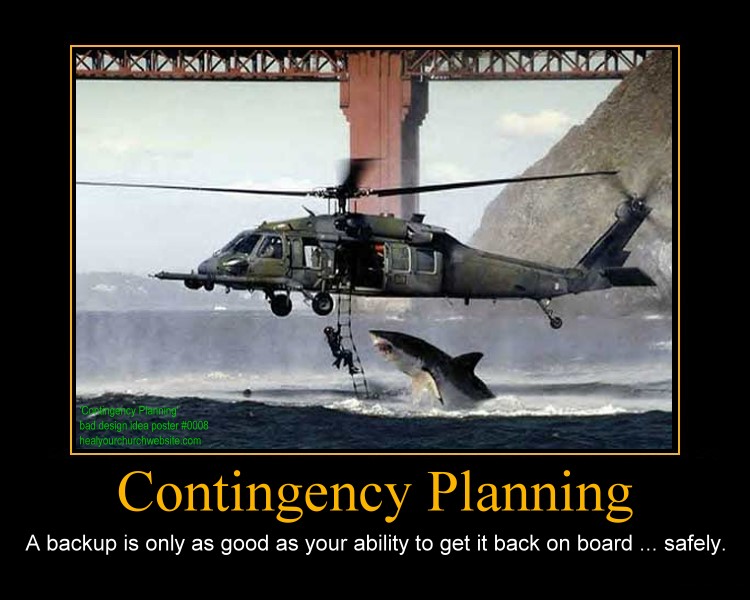
    Bad church web design poster 0008 - contingency planningThose who fail to plan, plan to fail. While this aphorism is very worn, it is also very true. Here are some simple things you can do with mysqldump, crontab, tar/gzip and a little contingency planning to insure you don’t lose your sanity when your server crashes upon the shoals of of virtual disaster.

    Check out these recent tales of real-life virtual horror as told by a variety of news sources from around the globe:

    • The outgoing Italian government posted the entire population’s tax returns on the internet causing a mad scramble which crashed the system.
    • Obama supporters were in for a surprise Monday when an attacker executed code on Barack Obama’s Presidential campaign Website that redirected users to Democratic rival Hillary Clinton’s campaign site.
    • According to police reports, a computer was stolen from the ADT Home Security branch on Sunbeam Center Drive sometime between April 12th and April 13th.
    • Tens of thousands of people were feeling short changed last night after a massive system failure wiped out all the Northern Bank’s ATMs.
    • A statewide computer problem again hobbled the state’s digital driver license system on Friday.

    The point is, hardware failures, power outages, software bugs, stolen computers, cross site scripted SQL injections, and/or zombie induced denial of service attacks can all turn your church and/or charity website into a tub of techno-mush quicker than you can recurse a binary tree.

    The only real defense against such failures is to plan for them – anticipating them in three ways:

    • backing up your data
    • moving your backed-up data off site
    • having and practicing how to restore backed-up data

    Here’s a very simple snippet from an oldie but goldie article entitled “How to backup your MySQL tables and data every night using a bash script and cron:”

    #!/bin/sh
    # backup data
    mysqldump -uroot -ppwd --opt db1 > /sqldata/db1.sql
    mysqldump -uroot -ppwd --opt db2 > /sqldata/db2.sql
    # zip up data
    cd /sqldata/ 
    tar -zcvf sqldata.tgz *.sql
    # email data off-site
    cd /scripts/
    perl emailsql.cgi
    

    The article also displays a script on how to email the data off site, not a bad deal if your data is small – such backups being just as simple to restore with this dynamic command line duo of directives:

    tar -zxvf sqldata.tgz
    mysql -uroot -ppwd db1 < db1.sql
    

    Things get trickier when you have tons of data, in which it may play into one’s restoration plan better to backup and restore a database by individual tables. Here is a set of articles that describes how to do this that includes some script examples you can modify to suite your needs:

    Either way, then it is just a manner of putting the shell script on a timer, or in the vernacular of crontab:

    1 3 * * * /usr/home/mysite.com/prvt/tbak.sh > /usr/home/logs/tbak.log

    If either of these shell script, bash-based approach seems to complex then perhaps one of the control panel, web-based method offered by UpStartBlogger’s post “8 MySQL Backup Strategies for WordPress Bloggers (And Others)” will do the trick.

    Here are some other related articles that might help, the last two include automagic date stamping of the backup files:

    The bottom line is this: just Peter implores us to make a ready defense in 1 Peter 3:15, so I’m asking you always be ready to make a defense to anything that endangers the data that is on your system so you’re not found tearfully dissheveled cowering in a corner meek and fearful, mumbling something about how you should have planned for such failures.

    You’ll be glad you did – probably at the most inopportune time possible.